 Muddy York
 Ontario Salmon Run: A Week by Week Guide
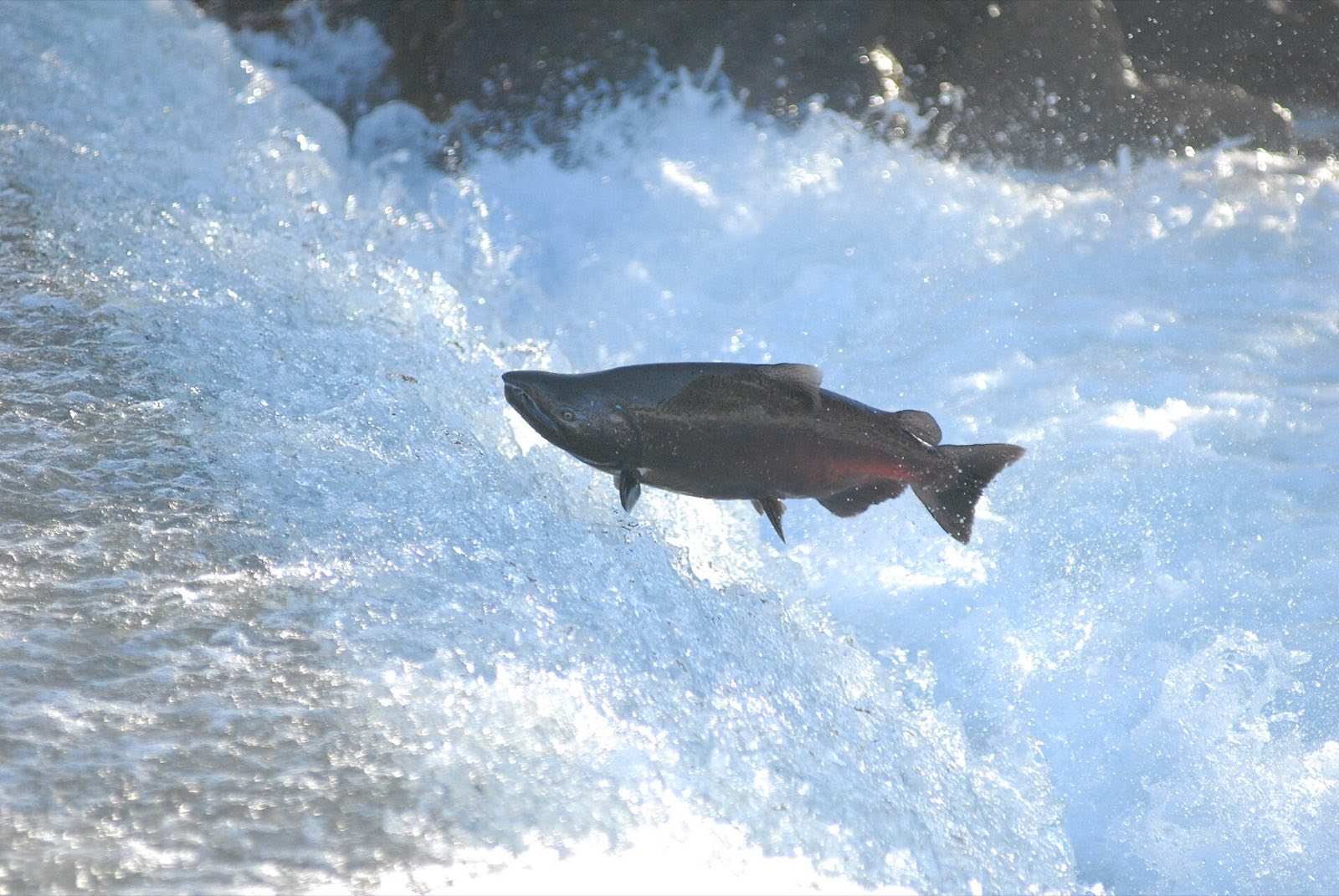
Every fall, Chinook salmon leave Lake Ontario and push up the rivers they were stocked in or born in. For a few weeks you can stand on a bridge in Port Hope, Bowmanville or Toronto and watch fish the length of your arm throw themselves at a waterfall. Here is how the run unfolds, week by week, and what to know before you go.
Why salmon run up Ontario rivers
Chinook salmon are not native to the Great Lakes. They were introduced and are now naturalized, and the province describes them as fish that gather at the mouth of rivers in late summer and early fall before migrating upstream to spawn. Like all Pacific salmon, a Chinook spawns once and dies. That is why the end of the run leaves dead fish along the banks, and why every fish you see in October is on a one way trip.
Coho salmon run the same rivers in smaller numbers, usually a little later. Atlantic salmon are being restored to Lake Ontario through the Bring Back the Salmon program, and in the tributaries of Zones 16 and 17 they are catch and release only, with a limit of zero.
Late July and August: staging at the river mouths
The run starts out in the lake. Mature Chinook gather off the mouths of their home rivers through August, and anglers fish for them from piers and harbour walls in places like Port Credit, Bronte and Port Hope. Very few fish have entered the rivers yet. If you only want to watch, it is too early.
What moves them is water. A good rain raises and cools the river, and the first fish push in on that bump in flow. A dry August can hold them in the lake for weeks.
Early to mid September: the first push
After the first real rain of September, fish start showing in the lower river and at the first barriers. In a wet year this can happen by Labour Day. Fish move mostly at night and in the low light of morning, then hold in the deeper pools during bright days.
This is the time to check the rules for the river you plan to fish. Several Toronto area rivers have stretches that turn into fish sanctuaries during the run. On the Credit River, the water from Highway 403 up to Britannia Road in Streetsville is closed from August 15 to December 31. The details for each spot are on our salmon run pages.
Mid September to mid October: peak run
On most Lake Ontario tributaries the run peaks from about the third week of September to the middle of October. This is when the fish ladders are busiest:
- Port Hope: the fish ladder at Corbett Dam on the Ganaraska River. See the Port Hope salmon run guide.
- Toronto: the weirs on the Humber River at Old Mill. See the Humber River at Old Mill.
- Bowmanville: the fish ladder on Bowmanville Creek. See Bowmanville salmon run.
- Mississauga: Erindale Park on the Credit. See Credit River salmon run in Mississauga.
- Owen Sound: below the Mill Dam on the Sydenham River, on the Georgian Bay side. See Owen Sound salmon run.
Fish move in waves. A day after rain can be full of jumping fish, and three dry days later the same ladder can look empty. If you want to see salmon jump, go one or two days after a rain, early in the morning.
Want to know when a river is rising? Muddy York Fishing shows live flow, water temperature and today's season status for 30+ Southern Ontario rivers. Try it free for 7 days.
Late October and November: the tail end
By late October most Chinook have spawned. You will see spawned out fish with white, frayed fins, and dead fish on the gravel bars. This is not a sign of a problem; it is how the run ends.
The rivers do not go quiet, though. Steelhead and lake run brown trout follow the salmon in to feed on loose eggs, and the fall steelhead season starts in earnest. Our steelhead guide covers that next chapter.
Fishing the run the right way
Salmon in the river are spawning fish, and the rules reflect that.
- No snagging. Ontario's general regulations prohibit catching or keeping a fish by hooking it anywhere other than the mouth, and a fish hooked that way must be released immediately.
- Know the stretch. Seasons change at bridges, rail lines and dams. A spot that is open all year can be 100 metres from one that is closed.
- Stay off the gravel. Spawning beds (redds) are the light, cleaned patches of gravel. Wading through them crushes eggs for the next generation.
- Give fish room at barriers. Fish stacked below a ladder or dam are exhausted. Many barriers have closed zones around them for this reason.
Bring the right gear for watching
You do not need a licence to watch. Polarized sunglasses help you see fish under the glare. Wear boots with grip, since river banks in fall are muddy and leaf covered. Keep dogs leashed and back from the edge, and stay behind railings at fish ladders.
Quick answers
When is the salmon run in Ontario? Mostly mid September to mid October on Lake Ontario tributaries, with fish staging off river mouths from August and stragglers into November.
Where is the best place to see the salmon run near Toronto? The Humber River at Old Mill is the easiest, a short walk from Old Mill subway station. Port Hope and Bowmanville have fish ladders that are worth the drive.
Can I keep a salmon I catch in a river? In open water, yes, within your licence limits (Pacific salmon are S-5 and C-2 in Zones 16 and 17), but only if it was hooked in the mouth. Atlantic salmon must be released.
For the full picture of rivers, timing and rules, read our Ontario salmon run guide, or open the Muddy York Fishing app to see which rivers are rising today.
Cover photo: Chinook salmon jumping, U.S. Fish and Wildlife Service, via Wikimedia Commons.jpg). Public domain.
Know which rivers are fishing, every morning
Live conditions, official Ontario season status and fly picks for 30+ Southern Ontario rivers.
Start your free 7-day trial